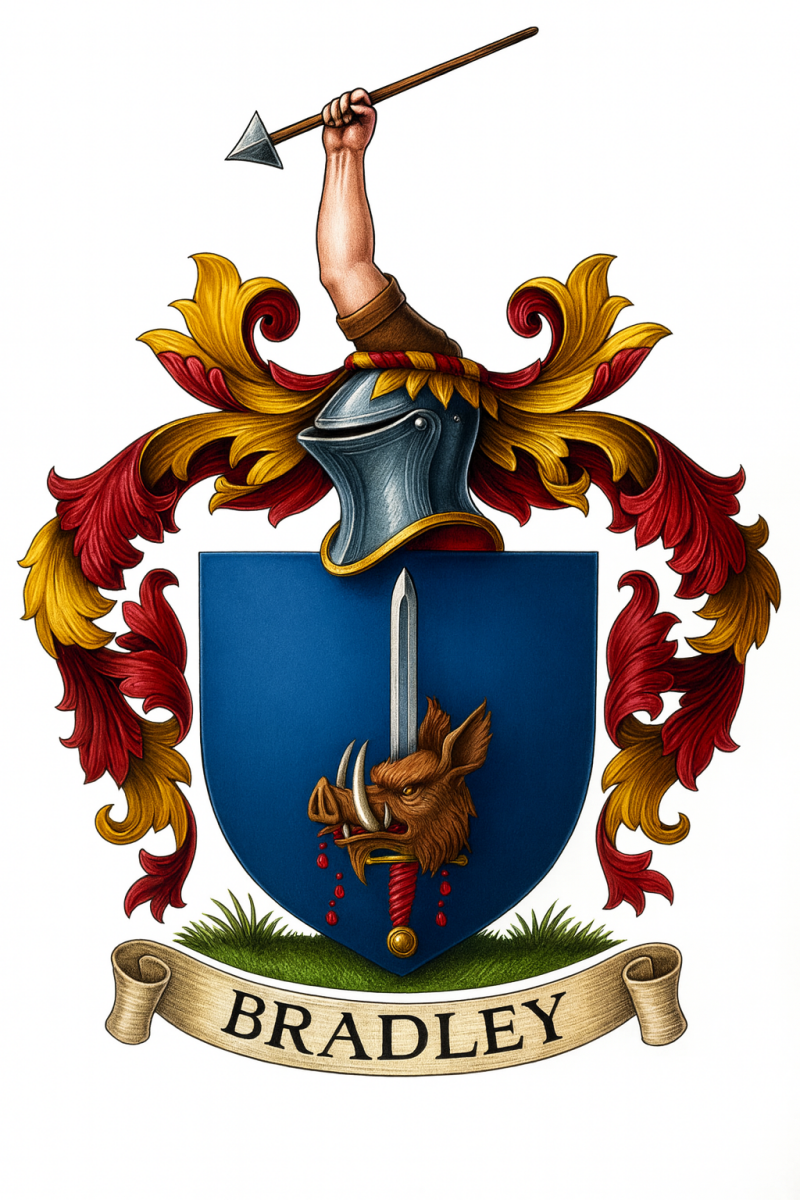
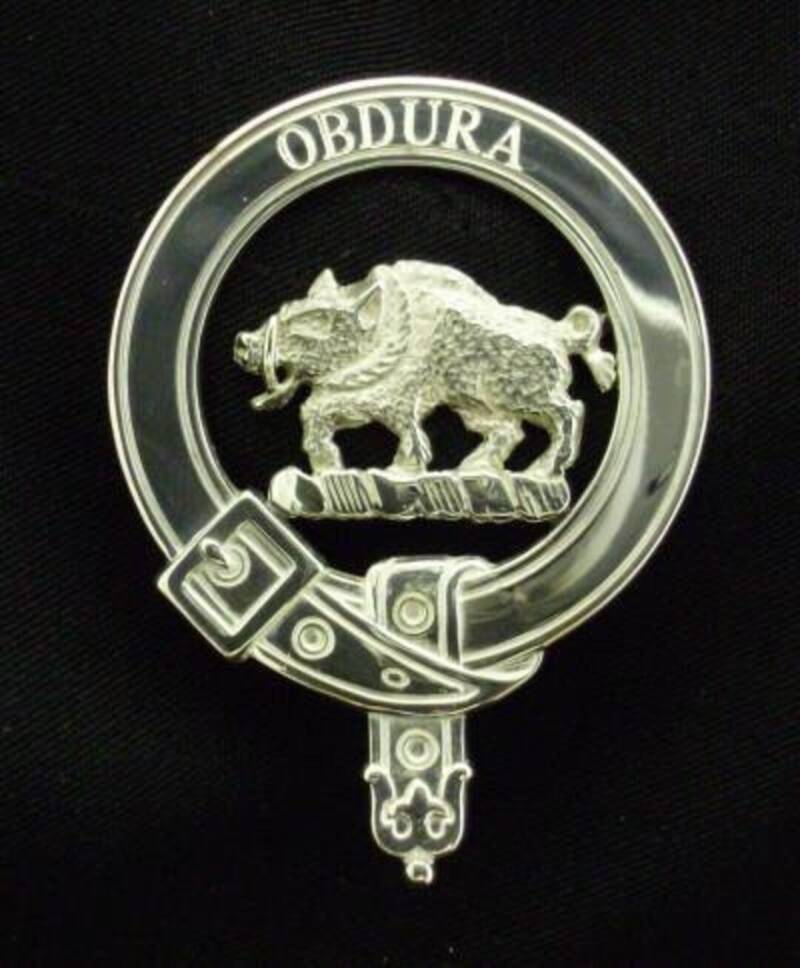
Bradley Family History

O Bhrolcháin Royal Princely Dynasty, and the family's Prince-Bishops of Ireland and Scotland.

Notes from Reeves "Life of St. Columba," by Adamnan XLVII - Flaithbertach Coarb 1150-1175.  

[Introduction, p. clxxx]

Surnamed UA Bhrolcháin. 615AD, and belonged to the Cinel Feradhaich, a clan so called from Feradhach, grandfather of that Suibhne Meann, the High King of Ireland, and was the fourth in descent from Eoghan, the son of Nail of the nine hostages. Eoghan was the founder of the Cinel-Eoghain race. The Cenel Feradhiach of Sept of the Royal Princely O'Brolchain family is now territorially represented by the barony of Clogher, in the southern part of the county of Tyrone. The first of the O'Brolchain family who is mentioned in the Annals was Royal Prince Maelbrighde Ui Bhrolchan, styled prim saer Erren "chief mason of Ireland"- Od Vers, whose obituary is entered in the ann. Ult. at 1029AD. 


UI BHROLCHAIN, FLAIBHERTACH (d. 1175), first bishop of Derry, belonged to a family which produced several learned men and distinguished ecclesiastics from the twelfth to the thirteenth century. They were descended from Suibhne Meann, king of Ireland from 615 to 628, and their clan was called Cinel Fearadhaich, from the king's grandfather Fearadhach, who was fourth in descent from Eoghan, son of Niall Naighiallach, so that they were one of the branches of the Cinel Eoghain.

Before the taking of surnames

Cenél nEógain was originally based in Inishowen, Donegal, as their power grew, they moved eastward. By the 8th and 9th centuries they were the dominant kingdom in what is now Derry and Tyrone. With the expansion of the Cenél nEógain into Airgialla, the territory of Uí Tuirtri west of the River Bann eventually passed into the overlordship of Tír Eóghain. This was when the MacCathmaoils were charged by the O'Neills to protect the Glenshane Pass (Maghera), a major mountain pass cutting through the Sperrin Mountains. By the 11th century, the power base of the Cenél nEógain had shifted east from Ailech to Tullyhogue in County Tyrone. The McWilliams tests under R-BY50792 and R-BY50792 > R-BY18213 go back to the Parish of Ballynascreen, which borders Maghera and the Glenshane Pass. To understand where the McWilliams name originates, you must study the history of the Catholic church in this area. In the 12th century the push was on to convert the Catholic church in Ireland from a monastic foundation to that of a diocese. The Synods of Rath Breasail (1111) and Kells (1152), divided Ireland into two ecclesiastical provinces: Armagh in the north and Cashel in the south. Both synods were pivotal in reforming the Irish Church by transitioning it from a monastic-based structure to a modern diocesan and parish-based system. At the time Derry was not a diocese. The area dominated by Cenél nEógain was in the old Sees of Rathlure and Ardstraw. The seat of Ardstraw was in Urney. These synods also shifted parishes between dioceses. The Parish of Magherafelt shifted from the see of Ardstraw to Armagh. The diocese of Derry was set about 1158 when Flaithbertach Ua Brolcháin was given the title Bishop of Derry in an effort to stop him from taking the position as Prior of Iona. The Derry diocese was formed by combining the old sees of Rathlure and Ardstraw. The Ecumenical or Religious Line of the Mac Cathmhaoils branches off of R-FT74770 with the son Riocaird B. est. 1320 D.1376. His son, from the Annals: 1389- Arthur Mac Cathmhaoil provided to the see of Clogher as Bishop, D.1432 B. est. 1360. This Arthur had 2 sons, Son #1, Eòin B.est.1370, from the Annals: 1458- John Mac Cathmhaoil, Dean of Clogher and Rector and Erenach of Errigal (Trough). He had 1 son, Artúr B.est1410. Who had 3 sons, Eoghan Mac Cathmhaoil B.est.1450 D.1515, Bishop of the Diocese of Clogher (1505–1515), Artúr B.est.1450, Dean of Clogher, and Uilliam Oge Mac Cathmhaoil B.est.1450, Dean of Clogher. Son #2, Uilliam B.est 1370 D.1407, From the annals: 1401- William Mac Cathmhaoil, Dean of Derry (Diocese) and Rector of Urney (Furney) died 1407. The MacCathmhaoill’s and the Clandeboye O’Neils were in conflict from the beginning of Hugh Boy O'Neill's (Aodh Buidhe O Neill) reign in 1260. He would become king of Tyrone in 1260; however, his brother Niall Culanach contested the kingship and seized it in 1261, holding it until Hugh Boy expelled him from it in 1262 and killed his main ally, Donnsléibe McCawell (MacCathmhaoill). The MacCathmhaoills were in conflict with the Clandboye O’Neils in the 1500s, were hunted down, and were just about wiped out. This is when the massive surname adoption appeared: Campbell, Slavin, McWilliams, McSorley, McQuaid, etc. MacCathmhaoils living in these places for hundreds of years took these names. The McWilliams took their name from Uilliam B. est 1370 D.1407, From the annals: 1401- William Mac Cathmhaoil, Dean of Derry (Diocese) and Rector of Urney (Furney) died 1407.


Flaibhertach Ui Bhrolchan was abbot of Derry in 1150, and as such was the chief of the Columban churches in Ireland, and entitled Comharba Choluim Chille, or successor of Columba. Derry had been burned in 1149, and in 1150 he made a visitation of Cinel Eoghain, obtaining grants from the whole territory—a gold ring, his horse and outfit from Muircheartach O'Lochlainn [q. v.] as king of Ireland, and twenty cows as king of Ailech; a horse from every chief, which would have given him about fifty from the Cinel Eoghain; a cow from every two biatachs, or great farmers; a cow from every three saerthachs, or free tenants; and a cow from every four diomhains, or men of small means. In 1158, he attended an ecclesiastical convocation at Bric Mic Taidhg in Uí Laeghaire, a district of Meath, at which a papal legate was present; and it was resolved that he should have ‘a chair like every other bishop.’ This is generally considered the foundation of the bishopric as distinct from the abbacy of Derry. After the synod, he visited the territory of Uí Eachdhach Cobha, now Iveagh, co. Down, and Dal Cairbre, the site of which has not before been determined, but which is no doubt the same as Dalriada, the part of Antrim north of the mountain Slemish, called after Cairbre Riada, son of Conaire II, king of Ireland.

Flaibhertach thus visited the two parts of Ulidia, or Lesser Ulster, and obtained from its king, O'Duinnsleibhe, a horse, five cows, and a ‘screaball’—probably a payment in some kind of coin—an ounce of gold from the king's wife, a horse from each chief, and a sheep from each hearth. In 1161, he freed the churches and communities of Durrow, Kells, Swords, Lambay, Moone, Skreen (co. Meath), Columbkille (co. Longford), Kilcolumb, Columbkille (co. Kilkenny), Ardcolum, and Mornington, from all dues to the kings and chiefs of Meath and Leinster and visited Ossory. He pulled down more than eighty houses which stood adjacent to the cathedral of Derry and built around it an enclosure of masonry called Caisil an urlair, the stone close of the floor, in 1162; and in 1163 built a limekiln at Derry seventy feet square in twenty days. This was probably in preparation for rebuilding his cathedral, which he did in 1164, with the aid of Muircheartach O'Lochlainn. He made it eighty feet long, a vast extent compared with the very small churches then common in Ireland; but, as it is recorded to have been finished in forty days, it cannot have been an elaborate structure. In the same year (Annals of Ulster), Augustin, chief priest of Iona; Dubhsidhe, lector there; MacGilladuibh, head of the hermitage; and MacForcellaigh, head of the association called the Fellowship of God, and others, came to ask him to accept the vacant abbacy of Iona. 

The Cinel Eoghain, Muircheartach O'Lochlainn, and Gilla-Mac-Liag, coarb of Patrick, all opposed his leaving them, and he did not go. He died at Derry in 1175 and was succeeded in the abbacy of Derry by Gilla MacLiag O'Branain, of a family which furnished several abbots to Derry. 

Other important members of the learned family of O'Brolchain are: 

Maelbrighde O'Bhrolchain (d. 1029), who is called in the ‘Annals’ priomhshaor or archwright of Ireland. 


Maelisa O'Bhrolchain (d. 1086), who lived for the first part of his life in Inishowen, Co. Donegal, at Bothchonais, where an old graveyard and a very ancient stone cross, with an ox carved on its base, still indicate his place of residence. He afterwards migrated to Lismore, Co. Waterford, and there built a dertheach or oratory. He is described in the ‘Annals’ as learned in literature (filidhecht) in both languages, i.e., in Irish and Latin. He died on 16 Jan. 1086. Colgan states that he possessed some manuscripts in the handwriting of Maelisa O'Brolchain.


Maelcoluim O'Bhrolchain (d. 1122), bishop of Armagh. Maelbrighte O'Brolchain (d. 1140), bishop of Armagh. Maelbrighte Mac an tSair O'Brolchain (d. 1197), bishop of Kildare. Domhnall O'Brolchain (d. 1202), prior of Iona. He built part of the existing cathedral at Iona, and on the capital of the south-east column, under the tower, close to the angle between the south transept and choir, are the remains of an inscription, which was perfect in 1844, ‘Donaldus O'Brolchan fecit hoc opus,’ but has since been defaced, and now shows only some fragments of letters at the beginning and end. He died on 27 April 1202. 


The Iona Cathedral of the Isles NB: The broadly supported petition to the Vatican, 18 December 1443. [CSSR, iv, no. 968.] - From Alexander, Lord of the Isles, James King of Scots, Abbot MacKenzie, and other temporal lords and nobles of the Isles: - Annulment of letters to Fyngon Fyngonni [MacKinnon]; Mandate issued 8 Jan 1444. ("Acts of the Lords of the Isles; Appendix B-16; Munro and Munro; 1986.) By c.1450, due to MacKinnon's corruption, “the monastery had collapsed, impoverished in its rent and of extreme poverty.” Iona Abbey Church as it stands today (restored 20th c.) is due to the resources and rebuilding by the CLAN DONALD HIGH CHIEF, LORD OF THE ISLES, “JOHIS DE YLE COMIS ROSSIE DOMINI INSULARUM”, c.1450-80 (1461: John’s grand expectations of the Treaty of Ardtornish-Westminster with Edward IV.)  

The right of patronage is hereditary (haereditarium), e.g., “entitled to the right of presentation, honorary rights, utilitarian rights (iura utilia) and the cura beneficii.” And so are the responsibilities: “If the church connected with the patronage is threatened with total ruin, or the endowment with a deficit, if those first bound to restore it are not at hand, the bishop is to exhort the patron to rebuild (reœdificandum) or renew the endowment (ad redotandum).” “It was the founder of a house and his heirs who provided the impetus to build or rebuild, who might contribute ideas, and who furnished resources to finance the project” (Monastic and Religious Orders; p.152; Burton, J., 1994). Lord John II’s enterprise employed Donaldus O'Bhrolchan of the Lordship’s long-serving hereditary chief masons, church-wright's and personal secretaries from the Derry family of Abbots/Bishops, past Coarbs of the St Columba Familia and Chief Lectors, Prime Artificers of Ireland. ["Donaldus O'Brolchan fecit hoc opus" ('Donal O Bhrolchan made this work') – incised on the capital of the south pier, east crossing (late 15th c.).]

Elaborate enhancements to the greatly enlarged abbey church were lastly superintended by John’s first cousin, Angus MacDonald II, Bishop of the Isles, with his CATHEDRA firmly set on Iona. His grandfather, DONALD (II) of Harlaw, had acquired and gifted to the Abbey c.1412-21 the priceless “Hand of St Columba” - a rarity and the only corporeal relic of St Columba repatriated from its five centuries of safekeeping in Derry, Ireland - a prestigious, sacred “Hebridean Holy Grail”. Donald and his artists enshrined it in a ‘charismatic’ gold and silver reliquary of ‘dazzling, wondrous beauty’. This event, of momentous religious significance and high political status, was achieved after a three decade's three-decade-long partnership with his 2nd cousin, the Iona Claustral Prior and reforming Abbot John MacALASANDAIR from a senior line of Clan DONALD [now MacAllister]. Flann O'Brolchain (fl. 1219), abbot of Derry, was elected coarb of St. Columba in 1219. He was elected by the Cinel Eoghain, and the community of Derry opposed him. Aedh O'Neill put him into office, but the community of Derry soon after expelled him and elected another abbot.[Annala Rioghachta Eireann, ed. O'Donovan, vols. ii. and iii.; Annals of Ulster, ed. McCarthy, vol. ii. Rolls Ser..; Annals of Loch Cé, ed. Hennessy, vol. i. Rolls Ser..; Reeves's Antiquities of Down, Connor, and Dromore; Reeves's Life of St. Columba, written by Adamnan, Dublin, 1857; Colgan's Acta Sanctorum Hiberniæ.]


Here are excerpts from an article in the Irish Times of Monday, February 16, 2009: "Genetic studies show our closest relatives are found in Galicia and the Basque region ... "Our closest relatives are found in various parts of Galicia and the Basque Country, according to genetic studies led by Prof Dan Bradley of Trinity College Dublin’s Smurfit Institute of Genetics. He presented his research over the weekend at the American Association for the Advancement of Science annual meeting in Chicago. "He was joined by Queen’s University Belfast archaeologist and linguist Prof James Mallory, who talked about efforts to link these DNA studies with the transmission of languages across western Europe. 


The genetic DNA evidence supports these claims. "The Book of Invasions from the 8th century talked about an invasion by the Spanish king Milesius, he said. "His group also looked for genetic linkages between people sharing a common surname, something passed along from the male lineage like the Y chromosome. "They found linkages that traced back to the famous Ui Neill kindred, from whom Niall Noigiallagh, Niall of the nine hostages, was descended. ..." See: Researchers Trace Roots of Irish and Wind Up in Spain by Nicholas Wade, published on March 23, 2000, in the National Science/Health section of the New York Times; Basques are Brothers of the Celts, an article of April 3, 2001, by Robert Highfield of The Daily Telegraph. 


The Milesians were the fifth and last Celtic people to invade and settle in Ireland. The family trees were extracted from the fifth volume of Lebor Gabálá Erenn: The Taking of Ireland (translated and edited by R. A. Stewart Macalister)." See also, on Timeless Myths, the page on the Book of Invasions: "The people of Ireland in medieval times had never believed that the Gaelic-speaking people were native to their land. They had believed that Ireland was invaded and settled by successive Celtic tribes over different periods. Their history is based largely upon the pseudo-historical Lebor Gabala, translated into English as the 'Book of Invasions', and Cath Maige Tuired, or the 'Second Battle of Maige Tuired'."

And here is a quotation from Tapestry: Weaving the Myth, History, and Archeology of Ancient Ireland. - The Milesians: "Once again, a better-organized force overcame the defenders, unused to large-scale invasions, and Sovereignty of Ireland passed to the Milesians in the Year of the World 2746, or aka 1268 BC. The mythological invasions of Ireland were over. 


The arrival of the Milesians coincides exactly with the Late Bronze Age (13th-9th centuries BC)." "The Uí Néill sample population was composed of the following surnames (sample number): (O’)Gallagher (12), (O’)Boyle (9), (O’)Doherty (5), O’Donnell (4), O’Connor (3), Cannon (3), Bradley (2), O’Reilly (2), Flynn (2), (Mc)Kee (2), Campbell (1), Devlin (1), Donnelly (1), Egan (1), Gormley (1), Hynes (1), McCaul (1), McGovern (1), McLoughlin (1), McManus (1), McMenamin (1), Molloy (1), O’Kane (1), O’Rourke (1), and Quinn (1)."  The Irish Modal Haplotype (IMH) of the Moore/Trinity study was determined by an analysis of the Y-DNA of 59 members of 25 families traditionally associated with the Ui Neill. Gallagher (Donegal), Boyle (Donegal), Doherty (Donegal), O'Donnell (Donegal), Connor (Kerry), and Cannon (Donegal) made up 36 members of the 59 whose DNA, whose Y-DNA was studied. The County listings in parentheses indicate where the surname was most common in the 19th century according to Irish Ancestors. Other names used in the study were primarily associated with the following counties: Bradley (Derry), Reilly (Cavan), Flynn (Cork), McKee (Down), Campbell (Down), Devlin (Tyrone), Donnelly (Tyrone), Egan (Tipperary), Gormley (Tyrone), Hynes (Galway), McCaul (Monaghan), McGovern (Cavan). McLoughlin (Donegal). McManus (Fermanagh), McMenamin (Donegal and Tyrone), Molloy (Offaly), Kane (Derry), Rourke (Leitrim), Quinn (Tyrone). McLaughlin of Dun na nGall. Several good articles on the DNA readings of the Northwest Irish (NWI) haplotype will be found under DNA on John D. McLaughlin's website: McLaughlin of Dún na nGall. In his article entitled Ui Neill DNA, McLaughlin assigned the surnames used in the Trinity study to the following clan affiliations: 


Cenel EoghainBradley, Gormley, Devlin, Donnelly, McLoughlin, O'Kane, Campbell, McCaul, Quinn ("Note: Campbell and McCaul are in this case both probably anglicized forms of MacCawell.") Cenel Conaill: O'Gallagher, O'Boyle, O'Doherty, O'Donnell, Cannon, McMenamin. 


Connachta: O'Connor, O'Reilly, Flynn, Hynes, McGovern, McManus, O'Rourke. Unknown: McKee, Egan, Molloy, McLaughlin, then includes pedigree charts showing the traditional descent of these families from Niall Noígiallach "of the Nine Hostages," and Niall's ancestors, including his father, Eochaidh Mugmedon. Irish Ancestors' surname dictionary lists Bradley with the Gaelic Ó Bhrolcháin and says:  

"Bradley. Very numerous: widespread, especially Ulster and Leinster. Ireland. Ó Brolacháin".


An Ulster sept of note in Donegal, Tyrone, Derry, and Meath.  

It seems likely that some Bradleys are of English origin, as the name is widespread there. SGG. "Ó Bhrolcháin. Brollaghan, Bradley: an-líonmhar mar Bradley i dtuaisceart Uladh. Bhí baint acu le Doire le fada. Clann ionráiteach sa mheán-aois: Mael Íosa Ó Bhrolcháin (+1086) a chum "Deus meus adiuva me", iomann atá i bhfeidhm fós. Bhí craobh i gCorcaigh faoin mbréagriocht Bradley, ach is cosúil gur sloinne Sasanach Bradley i Cúige Laighean. IF. "Ó Brolcháin. rare: Dublin, etc. Ir. Lang. See Bradley." From Under the Oak: 


Saint Máel Ísu Ua Bhrolcháin"Máel Ísu Ua Brolcháin was a religious poet from Donegal who was a member of the Armagh community. His death in Lismore is mentioned in the Annals of Innisfallen in 1086. He is recognized as one of the primary poets of his age, and there is a full-page account of his life and family in the 16th-century Acta Sanctorum by Colgan. He was educated in the monastery of Both Chonais, Gleenely, beside the present-day Culdaff, Co. Donegal. His death is mentioned in all major annals ...  Flaithbertach O Bhrolcháin, who died about 1175. was abbot of Derry and head of Columban churches in Ireland.


Prince and General Flann Adag Ó Brolcháin of Baile Uí Bhrolcháin in Donegal who in later life lived in Derry reformed the Cenel Bhrolchan of the Clann Bradley. He was determined to re-establish the family's and Clans in Ireland and in Ulster and also support the O'Neill in his plight against the English due to the Plantation of Ulster and the persecution of the Catholic families and religious members of the Catholic Church some of which was direct family members being executed on site. H.R.H. Prince at birth Flann Adag Ó Brolcháin is 4th in Line of Royal descent of the Line of Náill, the High King of Ireland. Prince and General Flann Adag O'Brolchain was part of a historical lineage associated with the Bradley family, which has royal and noble connections in Ireland. Flann Adag O'Brolchain was born in County Donegal, Ireland, and is noted for his lineage, which includes several learned men and distinguished ecclesiastics. The family is part of the Cenél Fearadhaigh, a branch of the Cenél Eoghain clan, which has historical significance in Ireland. The family has a rich history, with notable figures such as Flaibhertach O'Brolchain, the first bishop of Derry, and other royal princes descending from the O'Brolchain lineage.


Prince and Major Charles Bradley born Ó Brolcháin, one of six who built the first church in Cambria County, Pennsylvania for Rev. ‘Russian Prince’ Demetrius Galitzin. Has was a blacksmith by trade. His last work in Ireland was to shoe a general’s horse of the English army that was bound for colonial service during the American revolutionary war. The following anecdote is given to the writer regarding him; As he finished the shoeing of the general’s horse, he remarked to those present in the shop, “That is the last work I will do in Ireland until I oppose that general in the cause of freedom in the colonies.” Several of his companions accepted his cause, and at once sailed for the states, during their voyage they were pursued by an English ship, which would eventually have captured them were not the impending dangers overcome by the skill and tactics of their valiant captain. When they landed, they joined the revolutionary soldiers and opposed and successfully captured the very general whose horse he shod in Ireland. Prince and Major Charles Edward Bradley (1750–1826), originating from Ballynascreen, County Londonderry, Northern Ireland ( FamilySearch), played a notable role in early transnational Irish experiences during the era of Irish emigration and diaspora. His activity illustrates both the military and religious dimensions of Irish participation abroad. Military Engagements and the American Revolutionary Context Bradley served as a military officer during the American Revolutionary War, with recorded accounts noting his capture of a British general, highlighting his direct engagement in significant continental conflicts (1).His service exemplifies the broader pattern of Irish émigrés contributing to military endeavors across the Atlantic. Irish soldiers often leveraged their skills overseas, simultaneously forging a diasporic measure of influence and reputation.

1 Source Religious and Community Contributions Beyond military service, Bradley was involved in civic and religious support: he was among six men responsible for constructing the first Catholic church under Prince Demetrius Gallitzin in the Pennsylvania wilderness (1).This action reflects a central feature of the Irish diaspora: the transplantation and sustenance of Irish Catholic culture and identity in the New World. Through church-building, Bradley contributed to community cohesion, faith preservation, and the social infrastructure facilitating the Irish immigrant experience in America. 1 Source Diasporic Significance Individuals like Bradley illustrate how Irish emigrants exerted influence beyond Ireland, helping shape colonial and early American communities through military, religious, and social engagement. His dual role in combat and community institution-building aligns with recurring diasporic themes, whereby military service and cultural enterprise often empowered Irish identity in foreign contexts. In broader historiography of the Irish diaspora, Bradley exemplifies the type of Irish actor whose transatlantic movements linked Ireland to emerging global networks, contributing to the Irish presence in both sociopolitical and religious spheres overseas. Conclusion Major Charles Edward Bradley’s role in the Irish diaspora can be summarized as dual-faceted: Military participation in the American Revolutionary War, demonstrating Irish engagement in global conflicts. Cultural and religious institution-building, exemplified by constructing one of Pennsylvania’s first Catholic churches, thereby helping anchor Irish emigrant identity in the Americas. This situates Bradley as a representative figure in the Irish diaspora, illustrating the confluence of martial, religious, and community leadership as mechanisms through which emigrants shaped their host societies while maintaining Irish cultural continuity.


Prince Gerald Paul Bradley of the House of O'Brolchain was a significant figure in the royal lineage of the Bradley family. He served as the head of the House from December 1976 until March 2024. The Bradley family, also known as the O'Brolchain, has a rich history, tracing back to King Brión, the founder of the lineage. The family's possessions were located in various counties in Ireland, including Meath, Fermanagh, and Cork. Prince Gerald Paul Bradley was part of a royal line that has a long-standing connection to the High Kings of Ireland and the Kings of Aileach, reflecting the family's historical significance in Irish royalty. Was a member of the U.S. Air Force and Later the U.S. Army and retired honorably from service.


Prince Carl Raymond Bradley of the House of O'Brolchain

Genealogy.com:

Genforum & Family History Search

Prince Carl R. Bradley is head of the Clan Bradley through the formal registration of a unique family tartan that celebrates his and his family's Irish heritage.

Background on Carl R. Bradley:

Prince Carl R. Bradley, based in Raeford, North Carolina, is the designer and registrant of a tartan specifically for the Bradley family. This tartan was officially recorded in the Scottish Register of Tartans on June 3, 2025, and is intended to be worn or used by members of the Bradley family or by individuals authorized by him. The Scottish Register of Tartans. The creation of this tartan reflects both a personal and familial celebration of Irish heritage within the broader context of Clan Bradley traditions.

Connection to Clan Bradley:

Clan Bradley is historically linked to Anglo-Saxon and Scottish origins, with early branches found in Lincolnshire, England, and later across Scotland and Ireland. Members of the clan share the Bradley surname, which derives from "broad meadow," and has included notable figures across Europe and North America over centuries.

House of Names:

By registering a tartan in his name, Prince Carl R. Bradley establishes a ceremonial and heritage-based connection to the clan, aligning with traditions of Scottish clans where tartans symbolize family identity and lineage.

Cultural and Genealogical Significance

Tartan Registration:

The tartan designed by Prince Carl R. Bradley is a formal acknowledgment of family lineage and heritage, consistent with Scottish and Irish clan practices.

Heritage Celebration:

The tartan serves to commemorate Irish roots within Clan Bradley while providing a tangible symbol for ceremonies, clothing, and family gatherings.

Clan Legacy:

Through lineage and the newly registered tartan, Prince Carl R. Bradley contributes to the ongoing recognition of the Bradley family in the context of diaspora communities, linking American descendants with historical roots in Ireland, England, and Scotland

3 Sources:

In summary, Prince Carl R. Bradley's association with Clan Bradley is primarily through his initiative in designing and officially registering a family tartan, reinforcing both cultural identity and heritage continuity for the Bradley family worldwide.

The Scottish Register of Tartans.

Prince Carl R. Bradley’s connection to Irish heritage is rooted in his ancestral lineage and family identity:

Bradley Family Lineage:

The Bradley family traces its ancestry to Irish royalty, descending from Milesius, King of Spain, through his son Heremon, and ultimately to Brian, son of Eocha Moy Veagon, a King of Ireland around A.D. 350. This genealogical link connects the Bradleys to the ancient Gaelic nobility and the network of dynasties that historically included Irish High Kings (Web result 1).

Clan Heritage: Prince Carl R. Bradley is recognized as a chief or representative of the Bradley clan, which historically had septs in counties Cork, Mayo, and Donegal. This clan affiliation signifies a direct cultural and familial connection to Ireland, including ties to Gaelic traditions, heraldry, and nomenclature (Web results 1, 1).

Celebration of Irish Ancestors:

The creation and registration of a Bradley family tartan by Carl R. Bradley in 2025 formally commemorates the family’s Irish heritage, symbolically reinforcing the link to Ireland and the historical Gaelic clans (Web result 1).

Connection to Irish High Kings:

By descent from early Irish nobility, the Bradley lineage is associated with the historic network of High Kings of Ireland, linking contemporary clan members to the broader cultural and historical legacy of Irish monarchy and governance (Web result 1).

4 Sources:

In summary, Prince Carl R. Bradley’s Irish heritage is affirmed through ancestral descent from Gaelic royalty, clan identity, historical territories in Ireland, and ongoing cultural recognition via symbols like tartans. This embodies both genealogical and cultural continuity with Ireland’s royal past. Prince Carl Bradley, also known as His Royal Highness the Sovereign Prince, is a prominent figure in the Royal House of Bradley. He is a 

Prince of Irish descent, tracing his lineage to the Rí Tuath, through Suibhne Meann, ArdRí, or High King of Ireland, and Rí or King of Aileach in 

Donegal. His Royal Highness is the firstborn son of Prince Gerald Paul Bradley and Kurfürstin, Herzogin, and Princess Consort Christine 

Rosemary Förnbacher. He was born on May 29, 1964, in Fredericksburg, Virginia, USA. Prince Carl is the eldest of six children, with four surviving sisters. He married Princess Consort Elke Petra Scherlein of Erlangen, Bavaria, West Germany 'at that time' Germany now; the officiation of the marriage was in Svendborg, Denmark, and they have three children: 

Princess Christina Elisabeth-Ann Bradley, Prince Patrick Ryan Bradley, and Prince Shawn Michael Christopher Bradley. 

The Royal House of Bradley, also known as the House of Ui Bhrolchan, is one of the oldest Royal families of Ireland. 

Prince Carl Bradley holds full legal sovereign status and has established new royal and noble titles for his royal princely house.

He has also issued a new Constitution and a constitutional law of succession. 

Prince Carl R. Bradley, based on context regarding his genealogical connection to Irish heritage, can be traced through a line of descent that links him to the ancient High Kings of Ireland, following the established royal stem recorded by Irish and Scottish pedigree sources.

Overview of the Descent:

Milesian Origins: 

The line of descent begins with Milesius of Spain, considered the progenitor of the Gaelic royal families of Ireland. His descendants include the legendary sons of Heremon, establishing the Milesian dynasty over Ireland.

Gaelic High Kings: 

From Heremon, the lineage proceeds through significant monarchs of classical Irish history, including:

Fiacha Fionn Ola

Tuathal Teachdmar

Conn Ceadcatha (Conn of the Hundred Battles)

Art-Ean-Fhear, through a lineage maintaining hereditary kingship across centuries. The genealogy continues through regional dynasties resulting in the consolidation of power in Munster, Leinster, Ulster, and Connacht.

Dalriada Connection and Scottish Succession:

The Gaelic kings of Dalriada in Scotland emerge through Fergus Mor Mac Earca, whose maternal grandfather was Loarn, a descendant of the Gaelic High Kings. This branch links eventually to the Scottish throne through Malcolm III of Scotland.

Medieval Scottish and British Royal Connection:

The Scottish royal line through Malcolm III and his descendants integrates into broader British monarchy genealogies.

Notable intermediaries include:

Duncan I

Crinan, Lord of the Isles

Various descendants ultimately connecting to the House of Stuart, then through the Hanoverians, and later to the Saxe-Coburg and Gotha / Windsor family.

Bradley Link:

While direct historical documentation specifically naming Prince Carl R. Bradley is limited, records indicate that members of the Bradley family of Irish descent were historically associated with the Gaelic nobility, and contemporary registration of a Bradley tartan acknowledges this heritage.

Through the Stuart and Hanoverian branches, the genealogical path extends from Scottish monarchs back to ancient Irish High Kings via the Dalriadic connection:

Milesius → Heremon → Fiacha Fionn Ola → Conn Ceadcatha → Art-Ean-Fhear → Fergus Mor Mac Earca → Loarn → Malcolm III → Crinan → Duncan I → ... → House of Stuart / Hanover → Bradley family (via noble alliances).

Conclusion:

Prince Carl R. Bradley’s line of descent to ancient Irish High Kings flows from the Milesian dynasty through major Gaelic rulers, transitions into the Scottish royal line via Dalriada, and integrates into the medieval British royal families, culminating in affiliation with the Bradley family, recognized for its Irish heritage. This lineage exemplifies a continuous hereditary chain from mythical and early historical High Kings of Ireland to contemporary nobility.

References and Sources:

Forman, The Lineal Descent of the Royal Family of England (1892)

Irish and Scottish royal genealogical records (O’Hart, Four Masters)

Historical context on Gaelic dynasties: Uí Néill, Eóganachta, Uí Briúin

Scottish succession: Malcolm III, Crinan, Duncan I

Tartan registration: Carl R. Bradley’s Irish-heritage tartan (Scottish Register of Tartans, 2025)


Link to lineage from Wiki:

House of O Brolcháin - EverybodyWiki Bios & Wiki


Link to the territorial Homeland and area of the Bradleys:

Baile Uí Bhrolcháin/Ballybrollaghan | logainm.ie